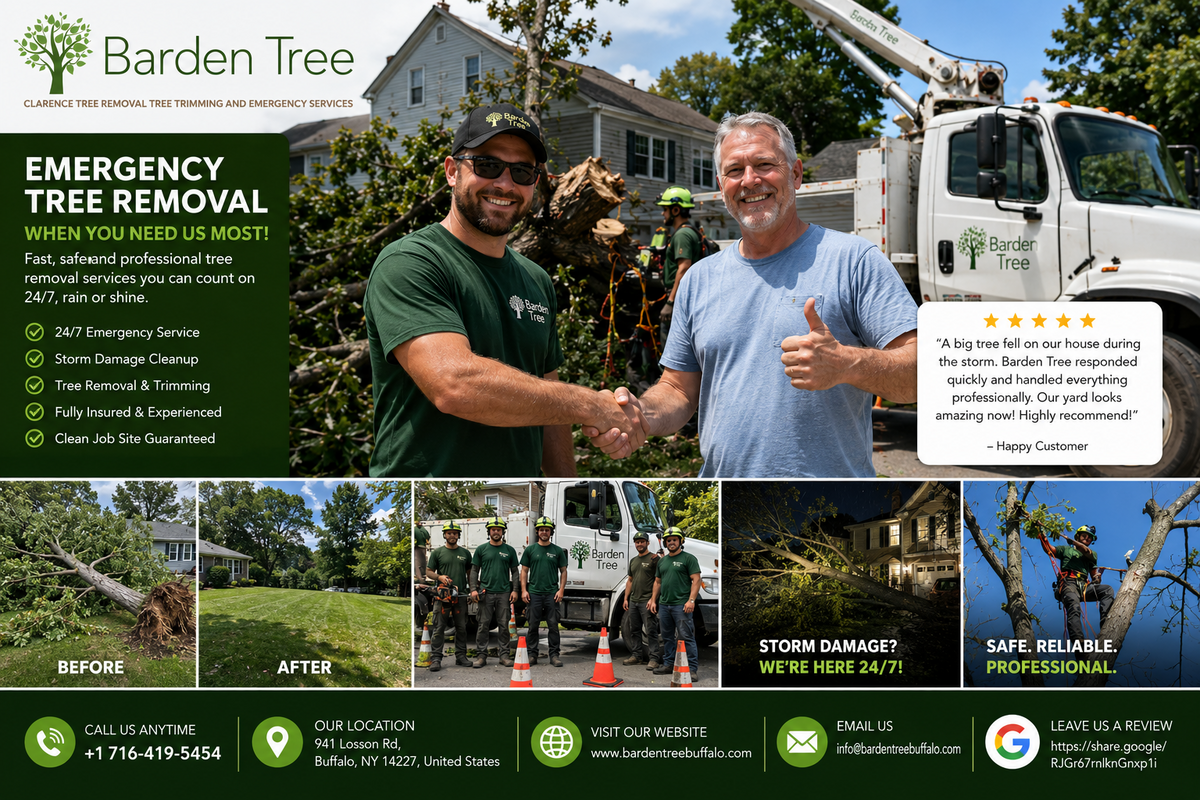

Severe storms can change the condition of a tree in a matter of minutes. Strong winds, heavy rain, snow, and ice can break branches, split trunks, loosen roots, or cause an entire tree to lean. Sometimes the damage is obvious, while other problems may not become noticeable until hours or days later.
Knowing the common dangerous tree signs in Buffalo NY can help Buffalo homeowners recognize potential hazards and decide when professional help is needed. If you notice signs of serious damage after a storm, a professional tree inspection can help determine whether the tree can be safely maintained or requires removal.
Why Storm-Damaged Trees Can Be Dangerous
A storm damaged tree may look stable while having significant structural damage. Broken limbs can remain suspended in the canopy, cracked trunks can become unstable, and damaged roots may reduce the tree's ability to remain anchored.
Storm-damaged trees can pose risks to:
- Homes and garages
- Vehicles
- Fences and outdoor structures
- Driveways and walkways
- Utility lines
- People and pets
- Neighboring properties
For this reason, homeowners should avoid assuming that a tree is safe simply because it is still standing.
1. Large Broken or Hanging Branches
One of the most obvious signs of storm damage is a large broken branch hanging from the tree.
Branches that remain partially attached can fall unexpectedly, particularly when wind continues after the original storm. A broken limb positioned above a roof, driveway, or walkway deserves immediate attention.
Do not stand underneath or attempt to pull down large hanging branches yourself. A professional can determine how the damaged limb should be removed safely.
2. Cracks or Splits in the Trunk
Look carefully at the trunk for new cracks, splits, or areas where the bark has separated.
A significant crack can indicate that the tree's structure has been compromised. This is especially concerning when a crack extends deeply into the trunk or occurs where major branches meet the main stem.
Because internal damage is not always visible from the outside, professional assessment may be necessary to determine the severity of the problem.
3. A Tree That Suddenly Starts Leaning
A tree that develops a new lean after a storm should not be ignored.
Strong winds and saturated soil can disturb the root system and reduce the tree's stability. If the ground around the base has lifted, cracked, or shifted, the tree may have experienced root damage.
A newly leaning tree near a house, garage, road, or utility line can present a serious hazard and should be professionally evaluated.
4. Uplifted or Exposed Roots
Storms can sometimes expose tree roots or cause the soil around the base of the tree to shift.
Look for:
- Roots lifted out of the ground
- Cracks in the soil
- Raised sections of soil near the trunk
- Broken or damaged roots
- A visible gap between the root system and surrounding soil
These signs can indicate that the tree has become less stable.
5. Broken Tree Tops
Severe weather can break the top portion of a tree, leaving a damaged crown.
A broken top may leave additional branches vulnerable to future wind damage. It can also create irregular weight distribution throughout the canopy.
A professional tree service can assess the remaining structure and determine whether selective pruning or another solution is appropriate.
6. Dead or Damaged Branches That Were Exposed by the Storm
Storms can reveal branches that were already weak or dead.
Deadwood may break more easily during strong winds, while damaged branches can become hazards after the storm has passed. Large dead limbs should not be ignored simply because they did not fall during the initial weather event.
Removing hazardous branches as part of regular tree care may help reduce future risks.
7. Bark Damage or Large Areas of Missing Bark
Storms can cause branches to rub against one another, break against the trunk, or strip sections of bark.
Small amounts of superficial bark damage may not necessarily mean a tree must be removed. However, extensive wounds, deep splits, or major sections of missing bark can indicate more serious structural damage.
If you are unsure how severe the damage is, arranging a professional tree inspection is a safer approach than making assumptions.
8. Large Branches Resting on Structures
A storm-damaged branch resting on a roof, garage, fence, vehicle, or other structure can create additional risks.
The weight of the branch may already be causing damage, and movement from wind can make the situation worse.
Avoid cutting large branches that are under tension. Improper cutting can cause the branch to move unexpectedly or damage the surrounding structure.
Professional equipment and controlled removal techniques may be needed.
9. Multiple Trees Damaged at the Same Time
After a major storm, homeowners sometimes discover that several trees have been damaged throughout the property.
When multiple trees have broken limbs, exposed roots, or leaning trunks, it can be difficult to determine which problems are most urgent.
A professional inspection can help prioritize hazardous trees and damaged branches, particularly when the property includes mature trees close to buildings or frequently used areas.
10. Signs of a Tree Being Uprooted
An uprooted tree is one of the clearest indications of serious storm damage.
If the trunk has moved and a portion of the root system is visible, the tree may be unstable. Even if it has not completely fallen, it can shift unexpectedly.
Keep people and pets away from the area and avoid attempting to push, cut, or pull the tree yourself.
When Should You Call for Hazardous Tree Removal?
Not every damaged tree needs to be removed. Some trees can recover after appropriate pruning or other professional care.
However, hazardous tree removal in Buffalo, NY may be necessary when a tree has severe structural damage, significant root failure, extensive decay combined with storm damage, or a high likelihood of falling onto people or property.
A professional evaluation can help determine the safest option.
Why a Tree Inspection Is Important After a Storm
A post-storm tree inspection can identify visible hazards and help homeowners understand the condition of their trees.
During an assessment, a professional may look at:
- The trunk and major branch unions
- Broken or hanging limbs
- Root stability
- Changes in tree position
- Signs of decay
- Canopy damage
- Proximity to structures
- Potential falling hazards
The purpose is to identify problems and determine what action, if any, is appropriate.
What Buffalo Homeowners Should Do After a Storm
After severe weather, safety should always come first.
Keep Your Distance
Stay away from trees with hanging branches, major cracks, exposed roots, or significant leaning.
Check for Utility Hazards
If a tree or branch has fallen onto power lines, do not approach it. Contact the appropriate utility or emergency service.
Avoid DIY Removal of Large Trees
Storm-damaged trees can behave unpredictably. Branches may be under tension, and unstable trunks can shift during cutting.
Arrange a Professional Assessment
If you see concerning damage, have the tree evaluated before attempting any cleanup.
Document Property Damage
If appropriate, take photographs from a safe distance for your records or insurance documentation.
Barden Tree for Storm-Damaged Trees in Buffalo
When a severe storm affects your property, dealing with damaged trees can be overwhelming. Barden Tree provides professional tree services for Buffalo homeowners dealing with storm-related tree problems.
From hazardous branches and fallen trees to storm cleanup and tree removal, our team can assess the situation and help determine the appropriate next step.
Professional tree care is particularly important when damaged trees are close to homes, garages, vehicles, utility lines, or other structures.
Frequently Asked Questions
What are the most dangerous tree signs after a storm?
Common warning signs include newly leaning trees, large cracks, broken or hanging branches, exposed roots, split trunks, significant bark damage, and trees that have shifted in the ground.
Can a storm-damaged tree still be saved?
Yes. Some storm-damaged trees can remain healthy after appropriate pruning and care. The extent and location of the damage are important factors, so professional evaluation is recommended.
Should I remove a tree that is leaning after a storm?
A new or worsening lean can indicate instability, especially if the roots or surrounding soil have shifted. Have the tree professionally inspected before deciding whether removal is necessary.
Is it safe to cut a fallen tree myself?
Large fallen trees can contain significant tension and may move unexpectedly when cut. Professional removal is recommended, particularly when the tree is large, near structures, or tangled with other trees or utility lines.
How quickly should a dangerous tree be inspected?
If a tree has severe structural damage, is leaning toward a structure, has exposed roots, or has large hanging branches, it should be evaluated as soon as conditions are safe.
Contact Barden Tree
Barden Tree Service
Address: 941 Losson Rd, Buffalo, NY 14227, United States
Phone: +1 716-419-5454
Email: [email protected]
Website: https://bardentreebuffalo.com/
Storm Cleanup: https://bardentreebuffalo.com/storm-cleanup
Google Visit: https://share.google/RJGr67rnlknGnxp1i
A severe storm can leave behind hazards that are not always immediately obvious. Cracked trunks, hanging branches, exposed roots, new leaning, and other dangerous tree signs should never be ignored.
If you believe you have a storm damaged tree on your Buffalo property, avoid taking unnecessary risks. A professional tree inspection can help identify hazards and determine whether pruning, cleanup, or hazardous tree removal in Buffalo, NY is the safest solution.
For professional storm-related tree services, contact Barden Tree Service at +1 716-419-5454 to discuss your tree damage and arrange an assessment.